Cris LaBossiere

Cris LaBossiere
Strength training and mountain biking. My two favorites
Showing posts with label exercise. Show all posts

Monday, August 24, 2015

Commuting by bike when you're out of shape

I've been fit for 30 years. That's made it pretty easy to have the opinion that riding your bike to work is easy. You just do it. 

The last few years though, illness that affects my physical capacity has at times reduced how frequently I could ride to work down to twice per week, otherwise I'd get really bagged out from commuting. 

Being less able to handle exercise made choosing to ride to work feel somewhat of a burden, "this is going to make me tired".  

Recently I was between cars so had to rely 100% on the bike for getting to and from work. Luckily it's only a 15-30 minute jaunt depending on if I take the straight shot or get away from traffic and take some trails. 

The first part of this year I was more affected by illness while the past two months blood tests show a mild swing into remission again. 

Feeling less sick is great, especially since it allows me to gain some fitness back. 

I was worried about how tired I was going to get. I had to plan to be less active after work and weekends. 

The first weekend after all week on the bike wasn't that bad. The third week I was pretty cooked, but every week after that was an improvement. 

I used to enjoy riding most days and it was great to be able to feel that again. 

Nothing beats the invigorating ride in and how pumped you feel when you arrive. Even with its sumptuous aroma and buzzy-buzz, coffee can't compete with how uplifted you feel after an active commute to work. 

Still, I was so glad to finally get my new (used) car after 5 weeks of commuting. I was having a few days where the legs felt like wet newspaper and needed a break. 

Enjoying daily riding can get the better of you, healthy and fit, or not. 

It was great to have my fossil fuel burner again. Gave my legs a rest, which made me faster. 

I'm doing some maintenance on the new wheels so I'm without my gas swilling behemoth again. But it's Monday!

Monday I drive to work with my weeks worth of clothing and lunch. I don't want to commute with a full backpack of clothes. What a PITA.  Or maybe, what a whiner. 

With overstuffed backpack in tow I hit the road for what turned out to be my strongest ride of the year, all 15 minutes of it. 

It felt so good to feel strong. The backpack? I got over it. I thought about the times I used to ride everywhere with a backpack. Grocery shopping was done by bike. 

Sure, nowadays there's picking up 10kg of kitty litter, $120.00 worth of groceries, 50kg bags of sand for yard projects etc.. Could use a bike trailer and plan smaller trips, but let's face it, the car is more practical and convenient for the large hauls with multiple stops. Those habits influence your thinking to be car-centric though, and had led me to move away from being bike-centric.. And getting sick only strengthened my less-bike-is-better new outlook. 

There's a balance in there somewhere, and that balance will have a tendency to shift depending on your situation. 

Recently I went through fearing riding my bike to work because it would be physically difficult and make me tired. I've never experienced that in the past. 

I got over that, and my rides got better. 

I'm not going to fool myself. I could very well become more ill again and have to ride less. But.. I'm going to take advantage, whenever I'm able, of how good it feels to ride to work, to gain fitness, and to realize that while cars have real-world use for sure, our dependence on them can cloud our judgment of what our options are, and of how enjoyable it is to have an active commute. 

Leave the car at home, often. Use it when you need it or your body needs a rest. Get out there and ride, walk, jog. 

And don't get disgruntled about backpacks and changing cloths. The real minus is living in a body that's less capable because it's not being exercised. 

Wednesday, January 23, 2013

Exhale to lose fat

Where does fat "go" when we burn it off?

Nearly all the stored fat we use as energy is expelled primarily through our lungs when we exhale carbon dioxide and water vapour (fat is made of carbon, hydrogen, and oxygen).

All of the food you eat can be accounted for by measuring everything that goes in and out of our bodies.  There are no mystery calories, and there is no mystery fat gain or fat loss.

If we eat too much, the extra food is stored as fat.  If we eat less food than the total energy we burn off in a day, we use energy from our fat stores.  We can measure the process of using food for energy in the carbon dioxide we exhale.

This is a normal measurement and is done daily in exercise labs all around the world.  I've been looking at this data for decades as a coach, and have had the testing done on myself many times. There's a description of this test at the bottom of the article (with photos).

It's all about accounting for mass.  We know the mass of molecules of carbs, fats, and proteins, and we know how we use the components of those molecules for energy, and we know how much energy is needed to move the mass of our bodies and keep our cells functioning.

It's an energy equation where we are able to accurately account for the mass of what we eat, and the by products of metabolism.  It's physics. Don't be misled by corny non-evidence based ideas that don't account for the mass of molecules.

I realize all this molecule stuff doesn't sound as promising or as exciting as the latest "fat loss breakthrough" claims, but it is reality.  All the fad fat loss claims out there are always proven to be fake anyway, so let's bypass the hype and go straight to the science.

Learn this reality so you can't be fooled by weight loss gimmicks. And more importantly, if you're trying to lose fat and are feeling frustrated about the process, learn how your body works (for real), so you can lose fat while by-passing the phoney promises, the hype, and all the crooks carefully constructing great sounding lies. We know fake news travels faster and reaches more people than supportable facts. Give the facts a chance.

Via a fairly complex chemical pathway, we breakdown fat molecules to make energy, and have some waste products left over, namely water and carbon.

The fat molecule: a triglyceride (right) is made up of atoms of carbon (black), hydrogen (grey), and oxygen (red).  Lot's of these are stuffed into fat cells in our "love handles", and aroud the rest of the body.

Carbon dioxide molecule (1 carbon + 2 oxygen).  We breathe out a bunch of these.  The black thing in the middle (carbon) used to be part of the fat molecule above.  After we break apart the fat (break the carbon-hydrogen bonds) for energy, there is carbon, hydrogen, and oxygen left over, the same amount as we started with, but no longer put together as a fat molecule. At the end of the energy production cycle, oxygen bonds with hydrogen to make water, and oxygen bonds with carbon to make CO2. We exhale the CO2.

Water and carbon mass, formerly fat in fat cells, former (too much) food on a plate, leaves our bodies through three primary paths.

Exhaling

The toilet

Sweat


A very tiny amount of the water is lost in sweat and through the bowel, some is recycled, and a fair amount is also exhaled as water vapour. The vast majority of the mass lost in fat loss goes out, a little bit at a time, in the carbon dioxide we exhale, save for the less than 1% that goes into urine.

Fat doesn't "melt" off, is not converted to muscle, can't be spot reduced with abdominal exercises (or triceps exercises or whatever), and isn't increased or decreased due to different genetics.

You also won't lose fat by exercising in a "fat burning zone", unless you have a calorie deficit, in which case it doesn't matter if you burn fat during exercise or not.  Only a calorie deficit, considering all calories consumed VS expended, will result in fat loss.  Consider this.  If you burn off 500 calories exercising in a fat burning zone, but the total calories you eat is the same as the total calories you expend during the day, no fat loss will occur because you have replaced everything you burned off.

The reasons why this is, are explained here.

We eat food, which has molecules of fat, carbs, and protein, which are made of mostly - you guessed it - carbon, hydrogen, and oxygen atoms.  When we eat too much we store the extra as fat (carbon, hydrogen, and oxygen atoms).   When we don't use the food molecules we eat as energy, we're literally left holding the bag.  We have left over molecules of food with nowhere to go, except our fat cells.  That's where we put the overflow.

We don't have anywhere else to put the fat.  We can't store it in our heads, though some might argue that some are capable of this feat. There's no room in our bones for lot's of excess fat from chronic overeating.  Our blood lipids can increase, but this is really a temporary thing as it takes time to shuttle excess fat to our fat cells.  Our blood can't handle all the extra food we overeat - it would simply become too dense and would't be able to be circulated.  We have adipocytes (fat cells) in our organs and do store some extra fat there, which is really bad for our health, but the storage capacity in our organs fat cells is very limited compared to the virtually unlimited capacity of our fat cells in our large adipose sites between our muscles and skin.  If we fill up our existing fat cells and keep over eating, our bodies just make more fat cells.

We don't poop it out - if we did we would have very oily stool every time we overate fat.  Sorry for the detail, just eliminating some of the common guesses out there.  When we do the drill down, all extra food we eat can be accounted for in the storage of fat in our fat cells.  It simply isn't biologically possible to put it anywhere else.  If it were, we'd see obvious evidence of this.

When we use up the stored fat, that mass has to go somewhere, it can't just disappear into nothing, that's not realistic.

Are you breathing?  Some of what you are exhaling used to be excess fat. Some of that carbon comes from using carbohydrates and protein as a fuel as well, so not all the carbon we exhale comes exclusively from fat.  If you have a calorie deficit, the molecules of fat used to make up for what you didn't eat come from your fat stores and are lost through exhaling carbon dioxide.

Without a caloric deficit or surplus, what you exhale matches what you ate. There is no net gain or loss of fat mass.

Visualize your foods in their microscopic form; a bunch of molecules. Follow the journey of these molecules through your digestive tract and into your body.  The molecules will be used for energy by every cell in your body.  If you ate more molecules than your cells need for energy that day, the unused molecules are shuttled to your fat cells.

Your living cells use energy 24/7 even if you don't eat enough for the day.  Your cells still use molecules of carbohydrate and fat for energy, but when what you eat isn't enough to supply energy needs for the day, your body uses fat stores, and every gram of fat used can be accounted for.  You exhale it as carbon dioxide and some water vapour.

Actually, fat is continually shuttled in and out of our fat cells. Kind of like a storage depot that receives and ships out product every day. When our energy consumption matches our energy use, fat cells have no extra fat stored or lost.  Like a storage depot receiving 10 boxes but also shipping out 10 boxes.  Eat too much, and more fat is stored than used (you receive 10 boxes but your customers only need 6 boxes from you), leaving you with extra inventory.  Have a calorie deficit, and more fat leaves the fat cells than is put in, and you lose weight, a few grams at a time.  You're always breathing, and when you have a calorie deficit, some of the CO2 you're exhaling comes from fat in your fat cells, even when you're sleeping.  You're still burning molecules of sugar, fat, and protein to make energy (measured in calories) when you sleep.

Through being a little more active and eating a little less anyone can create a calorie deficit, and reduce their extra fat inventory.  A calorie deficit can't fail at producing fat loss, but we can fail to accurately account for how much we eat and exercise, obscuring the truth of us eating too much.

In case you were curious about how much carbon dioxide mass we exhale- (and I know you are), here are the stats:

About 2.45 grams (0.005 lb) per hour at rest

Between 50 and 90 grams (0.11 - 0.2 lb) per day for the average sedentary person

350 - 400 grams for a moderately active person 

600 or 700 grams per day for a very active person exercising 1 - 2 hours per day.

In an hour of moderate to hard exercise the average exerciser will exhale about 350 grams of carbon dioxide (0.8 pounds).

A very active person will blow out about 700 grams of CO2 on the days they exercise for about 90 minutes.  That's nearly 2 pounds!  This accounts for the equivalent mass of food energy consumed for the day, if there is no weight loss or gain.  Despite nearly 2 pounds of CO2 being exhaled, if you eat more than you burn off, the extra goes to fat cells.  Ever gone for a run or going to the gym and justifying eating more because you worked out?  Sure, you burned off energy, but if you eat more than you burn off, fat gain occurs.  The gains can be accounted for, as can the losses if you burned off more than you ate.

You don't have to exercise 90 minutes a day to lose fat, I only used that example because it exaggerates the values making it easier to see the difference.  150 minutes of moderate exercise per week and being mindful of reducing food intake is enough.

This exhaling carbon thing has been butchered and abused by diet "gurus" who invent crazy diets that involve, yes, "special" breathing techniques to breathe your fat away.  Impossible, of course, but because we can become desperate to lose fat, we can become susceptible to believing these false claims.  When you look at the calories recommended in these corny methods, they all use a low calorie diet.  They don't address this fact, and use misdirections to convince you "special" foods or food combinations have a magic influence on fat loss.  It's eating less, not the "special" claims, that is causing fat loss. The crackpots who push this stuff are gladly being paid by their customers whom they are lying to.

Changing how you breathe has no effect on fat loss.  You have to eat fewer calories (food energy) than you burn off in order for some of the carbon you exhale to result in fat loss.

If we eat as much carbon (from food) as we exhale, our weight will stay the same, no matter how much we breathe or how we breathe.

If we consume less carbon (from food; this is all about eating food, and what happens to it) than we exhale, we lose weight. For many people, weight loss is difficult.  People make different claims or assumptions about why this is.  When investigated it's always found that people who make such claims or believe in common weight loss fallacies, don't realize they over-report their exercise, and under-report their food consumption.   This is easy to do in our overeating culture, and also easy to do when food is habitually used as a reward.  You're less likely to want to acknowledge overeating, because that would mean having to deal with eating less, which can feel like getting less reward.

Calories in, calories out.  All accountable by adding up the carbon.  Sure, it's complicated science to do the measuring to figure all this out, but that's what scientists do.  For us, the science is already done, and to benefit from the research, we need to eat less and move more, to achieve a calorie deficit.

While calories in, calories out is the sole equation for fat gain and loss, we also have to be mindful of meeting our energy needs without eating too little or exercising too much in desperation to lose fat. We need a certain amount of food to supply important nutrients, and to meet our healthy minimum energy needs.

Did you know that gas powered cars also use energy stored in hydrocarbons?  That's what we're blowing up in the cylinders of our automobile engines; hydrocarbons are in the molecules of gasoline.

Let's say you have 65kg (29.5lb) of gas in your tank when full.  Fill your tank, and your car weighs 65kg more.   Use half a tank, and you lose 32.5kg of mass.  As you burn gas driving, the gas level in the tank goes down, and the car weighs less.  Where does the mass go?  Out the tail pipe in the form of exhaust.  Every kilogram of fuel that goes into your engine can be accounted for in the exhaust.

Lets say you plan on a long road trip, taking a route where there aren't any gas stations for part of the trip.  You'll need to fill some gas containers and keep them in the trunk. Kind of like eating too much food and storing extra fat.  When the gas tank is near empty, you start using your stored gas, and now you have less gas in the trunk, and your car weighs less.  This is analogous to fat loss in people.

What if you had those extra gas containers in the trunk, but then came across a new gas station where you expected none to be?  Might as well take advantage and top up the tank right?  This might be like someone surprising you with a box of donuts (or whatever unplanned eating).  You "take advantage" and add to your fuel stores when you do that.  If you don't have extra energy expenditure to burn off the extra, you retain the excess in fat stores.  If you don't drive off the extra stored gas, It doesn't go anywhere.

Most of us manage our gas use in cars reasonably well, rarely running out of gas.  We pay attention to the gas gauge and have a fair idea of how much driving we get out of a tank (or range from a charge). Pretty much all of us drive our cars in this way.  We're already good at managing the daily energy needs of our cars. If we incorporated this skill into how we eat and exercise, seeing food as energy supply, it makes it easier to understand our food intake/ energy needs.  But we can still be find it frustrating to overcome the temptation to overeat.

To lose fat we have to fill up less when we eat so we can use the extra energy we already have stored in our "tank".  We still need to replenish our supply of carbohydrates, proteins, essential fats, and vitamins and minerals daily, so cutting back too much deprives us of essential nutrients we need every day.  Remember the storage depot analogy, it's a continuous cycle.  If we cut off too much of the supply to the storage depot, the depot can't perform it's function because it won't be able to supply its daily baseline customer demands.  If we eat too little we can get tired and sick.

The only way to deplete the stored fat is to eat less than we burn off.

On average an approximate 500 calorie per day deficit is safe and reasonably manageable for most people, especially with adding a little bit of physical activity.

Gas mass in, exhaust mass out.  Storage depot boxes of product in and out.  A couple of analogies that very closely reflect our calories in - out balancing needs.

Carbon-hydrogen bonds, calories, food.  Just different words to describe the same thing in greater or lesser technical detail. Calories refer to the energy potential of food.

A lot of the mass of food we eat is not extracted into our bodies through our digestive system.  Much of it remains as the bulk that we - leave in the toilet.  A lot of the food mass we eat is actually water, so a pound of food doesn't have a pound of carbon in it. For instance, a 70 calorie, 28 gram slice of bread has about 2 grams of fiber and about 11 grams of water. About 40% of a slice of bread has no calories in it, and most of that portion has no carbon in it (the water).

Of the 70ish calories in that slice of bread (mostly from sugars, a tiny bit of fat, and small amount of protein), about 15% of the energy is used for digestion. We're left with about 60 calories worth of energy stored mostly in the carbon-hydrogen bonds of the sugars, fats, and proteins.

Fats, carbs, and protein are each different combinations of carbon, hydrogen, oxygen, and in the case of proteins; nitrogen as well. Fat is the most densely packed.

Like a shrewd accountant, your body can reconcile every molecule of food you eat with every molecule you use for energy and store as fat.  There is no metabolism mystery that causes unexplained fat gain, no genetic trait that causes people to gain fat without over eating, no verified accounts of people having a calorie deficit and gaining fat (impossible), and no verified accounts of people having a calorie deficit and not losing fat (also impossible).

The reason I wrote about fat loss from this perspective was to show that fat has a known value.  There is no mystery as to what fat is, and where body fat comes from and where it goes.  My hope is that I can put a small dent in all the contrived, misleading, misunderstood, and urban myth idea's that are so popular.

I'm not suggesting we focus conceptually carbon atoms to control body fat. That's impractical.

In day to day practical application we’re thinking about portion sizes, number of servings, and matching that up with our activity level.  We also need to be mindful of how some foods that fire up our reward centres can cause us to feel really compelled to eat too much.  Noting the difference between feeling hungry because you need the energy and feeling a craving because you want the reward of a favoured food is important.

Healthy fat loss is about burning off more than we eat and to do so we need to be mindful of how many calories (food energy) we're consuming.  What I offer here is proof of the fact that we know what a "fat roll" is made out of, where it comes from, and where it goes.  Creating a caloric deficit works to lose fat, and it works because it can't not work; it works because of physics and chemistry that is real and measurable.

No tricks, no gimmicks, no mystery.  We know how this works. Fat loss is explainable. Don't let anyone fool you with weird ideas, alternative facts, or fake news.  Be wary; the gimmick pushers are practiced at seeming sincere, know about peoples vulnerability, and know how easy it can be to manipulate a person feeling frustrated and desperate.  They make themselves appear as though they are empathetic and are on your side.  They know how appealing this can seem.  But really they are scammers.

Eat less, move more, and address where your eating motivation comes from.

Mayo Clinic says what I just said here, but they do it in two paragraphs click here

What are you eating?  Use eatracker to find out, and Cronometer

Update! Apparently I made a scientific breakthrough without knowing it... - sort of.

A recent study in the British Medical Journal has published a study on this topic, but interestingly, they state that this is a novel perspective on how fat loss works.

Not really, since I posted this article a year before the study was published., - and also... yeah... um... -everything I've written here is standard, basic science- that has been known for several decades.

Study: When somebody loses weight, where does the fat go? 

So how do we figure out how much carbon dioxide (CO2) a person is exhaling?

Why, in an exercise lab, of course..

Below is a picture of me in the University of Manitoba's exercise lab having my VO2 max assessed.

The tube in my mouth delivers the gases I breathe in and captures the gasses I breathe out.

In the print out below there is a VCO2 column that shows how much carbon dioxide I was exhaling in liters per minute.  At my moderate pace I was exhaling about 330 grams of CO2 per hour, some of the carbon in the CO2 from fat, a lot from carbs, and a little bit from protein.

For you calculating types out there, the density of CO2 is 0.001977 g/mL

This carbon thing isn't my idea, it's proven through research, and we've been measuring this for many decades. It's no secret.

The most challenging part of successful weight loss isn't the mechanics of eating less; it's changing our habits, our thoughts, and our sense of reward with food and exercise.  Studies show that the single reason why many people regain fat after losing it- is because they stop the new healthy habits and return to previous overeating habits.  The return is made because, as many will be able to concede, it's very difficult to get past the strong internal drive to overeat.  I have a lot of posts on how to do this though, so read my blog articles and learn how to lose weight and get fit.

Calorie denial... why we can't face the truth of overeating. Click here for article


Wednesday, January 2, 2013

Why do I gain fat when I exercise more?


A reader (KM) who is an avid cyclist asked me, "why do I gain weight only when cycling?"

She's not your average ride-the-bike-path-on-Sunday rider, she's into competitive cycling. She'll burn far more calories cycling than the average spin class enthusiast or recreational rider.

So what gives?

Whenever we have a question of weight gain we must always default to the singular reason for weight gain: eating too much. Consuming more calories than we burn off.

Once we set ourselves straight with that we start looking for where and why we're over consuming.

KM's mystery is not uncommon, and thankfully not really a mystery. What we're looking for is KM's motivation and reasoning to eat during the cycling season.

Here are the common motivations and reasons that explain weight gain during times of increased exercise:

With knowledge that the extra calorie burn is happening a reasonable increase in food intake is used to keep up with increased demand. The increase needed is simply overestimated. If this is the beginning and end of the story the situation will be remedied quickly by eating less.  More accuracy helps so a visit to eatracker.ca for food diary analyses is a good idea.  Measure the calories in and out and you'll have a better idea of what the right amount of food looks and feels like.

The extra exercise stimulates the person to get excited about overeating. This one is very common. Overeating is already a common reward that is shared socially. This is traditionally over-emphasized in sport where it isn't uncommon to celebrate post competition or post practice with excess food. The excess food is not perceived as negative but rather a positive and a necessity to complete the social experience of the physical activity. A competitor will usually be teased if they don't participate in the overeating so there is social pressure to comply with overeating.

It's also not uncommon to transfer the competitive nature from sport to eating with many athletes boasting about how much they can pound down after training or competing. This further exaggerates the reward emphasis placed on overeating.

When an expected rewarding outcome of physical activity is to overeat, the exerciser typically feels compelled to do the exercise not only to compete or train, but also to overeat afterwards. 

The deep driver for all of this is the reward association with food. It's good to have a healthy reward association with food, but research has shown that it's easy for us to miscalibrate the reward importance and develop the sense that overeating is very important.

Here's an article I did on emotional miscalibration a few years ago.  I cover interesting research on the subject.

Reward seeking is one of the most powerful motivators. Once the brain gets a sample of something rewarding it will cause behavioural adaptations to seek out the reward again.  The person will feel compelled to seek out the reward but also to generate reasoning that justifies the reward, even to the extent of irrational reasoning.

An example might be being in a fatigued state where training should be replaced with recovery but because of a special dinner where overeating is anticipated the person will choose to add exercise even though it will cause more fatigue.  The benefit of overeating is perceived as more important than proper recovery from training.

Once this becomes habituated it is often very challenging to reverse. Reversal involves self-talk, self aware cognitive processing, and outside help from friends, family or professionals doesn't hurt either.  It can take several months to overcome habituated reward, even years if there are lengthy periods of regression before a solid stint of 4 to 8 months of practice is realized.

Often we don't process the the sequence of feeling hungry and responding with eating. We just eat because we feel compelled to eat.

The steps to reversing KM's dilemma begin with being able to capture the moment and process, "I might be over serving myself here, I should eat less".

If it turns out KM is strongly influenced by the more common reward association, social pressure, and reward seeking aspect then additional self-talk steps are needed..

"I get that I really want all this food, but I now realize the reward I feel is disproportionate to how much I choose to eat. I'm going to eat less and feel good about it"

Whatever we tell ourselves will differ from person to person, but it will be something along those lines.

Beware: strong socially supported reward seeking is a tough contender. We're pretty good at employing denial and redirection to avoid correcting the behaviour.

Do you trick yourself into not exercising?

Your intentions were good and you were initially gung-ho about about getting more active but somehow it fizzled out.  Where did those great feelings and motivating expectations go?

Research on what drives human behaviours is fascinating but is notoriously difficult to design a study that isn't tainted with bias and other scientific control requirements for a good study.

To answer the question I've presented here the answer that seems to have the most scientific consensus is that true emotional and reward association changes did not occur. 

The practical translation is that if you found yourself drifting back to old habits it's because your origional learned, habituated reward seeking is still intact.  The 10 oz steak is still more appealing than the 3 oz steak.  Not exercising is still more appealing than exercising. 

Additionally it may be that healthy eating and regular exercise are still viewed as a form of restriction or even punishment.  Why would anyone keep doing something they thought was this negative and unrewarding?

A common irony that many of you may have experienced personally (myself as well), is that the reward you want to give yourself for having consumed healthy food or participated in exercise is; overeating unhealthy food - the very thing that causes weight gain in the first place.

Burned off a whack of calories the last time you exercised?  What are you thinking about?  How rewarding it's going to be to eat that extra whatever; or how good you feel for having exercised? 

If extra food is still a primary reward provider then that is where we'll end up, especially if we think we've been 'putting up' with arduous healthy eating and exercise.  Ate healthy?  You poor thing!  Terrible that you had to suffer through that.  It's ok though, just reward yourself with overeating.

Feel better now?

That's why there is an approximate 85-95% failure rate in sustaining healthy habits beyond the first few months of trying.

There is an attempt to change actions but a limited attempt to change how we cognitively and emotionally process how our sense of reward and well being is associated with our actions and beliefs. 

Hard to quit something you love and do something you hate.

There are some other interesting human behaviour things that occur where behaviour change is involved.

Study subjects who participated in weight loss studies and were successful in losing weight tend to gain all the weight back after the study is over.  What?  So you're a living example of scientific proof of successful weight loss.  Simply continue living with the same habits you were asked to do during the study and you're set for life.

Seems logical.  Logic is great until emotion screws it up.

Some researchers believe this is due to something called the Hawthorne Effect.  Although there is great controversy over what exactly the Hawthorn Effect is or isn't, the term is often used to refer to how a person is affected by being observed while doing something they feel they are expected to do.

If you're in a jumping contest what else are you going to do other than jump as best you can?  There isn't anything else to do other than choose not to participate.  If you really like jumping you're going to keep doing it after the contest is over.  If you're not into vertical accomplishments the jumping is over when the contest is over.

A possible explanation for weight loss study subjects who regain weight after the study is over is that the only reason they followed the weight loss study protocol is because they knew they were in a weight loss study and that their activities were being monitored and tracked.  The study subjects wanted to apease the researchers.

Because the study subjects had no real internal drive to lose weight for reasons they held as personally important or rewarding, other than the sense of reward they got from appeasing the researchers.. take away the study and you take away the only thing that was motivating the person.

I've seen similar behavior with people who work in the fitness business and with athletes.  As soon as they're not in the business or the sport anymore, the healthy eating and exercise is replaced with little to no exercise and overeating.  This happens during the off-season as well.  Many who are active in whatever tend to gain weight and lose fitness during the off-season and typically lament these negative effects and wish they didn't have the setback to contend with when the next season started.

Weight gain and loss of fitness occurs.  So what's happening here?  We've all heard that consistency over long periods is one of the key predictors of long terms success with continuing to live with healthy habits.

The reward of overeating and not exercising is greater than the reward of maintaining healthy eating and regular exercise.

One of the milestones is the six month mark.  If you can make it through six months of healthy habits with few regressions you have a much better chance of retaining the habits long term.

If this is true how do we have athletes of any stripe experiencing unhealthy weight gain and tremendous loss of fitness within mere months of stopping sport?  Ditto for fitness pro's..

The thinking on this is that so long as you are in the environment where external expectations to perform are placed on you and you feel compelled to meet the expectations of others (rather than mostly from satisfying yourself), you will no longer feel compelled to perform once removed from that environment. 

A person may have tricked themselves into believing that they are into healthy living.  In reality they were into feeling accepted only when they met the expectations of the environment they were observed in.

How's that for a mind-bender? 

Play this out and ultimately a person would have tricked themselves into eventually losing fitness and gaining weight because they were never really into fitness or good nutrition other than meeting work or sports requirements. 

So how do you tell if you're really into it or if you're destined to regress to weight gain and loss of fitness?

If you're fooling yourself:

If you feel that second servings are delectable and what your mind is on during the first plate
If you can't wait to eat desert after a huge meal
If you reason that extra exercise deserves the reward of extra food
If you feel exercise is a necessary evil
If donuts make you drool and broccoli makes you gag

You've made it to the real deal and are likely to succeed long term and not depend on external motivation:

If you feel motivated by exercise alone and not just the possible weight loss outcome
If you look at food as feeding your body the nutrients you need rather than getting full
If you love the taste of healthy food
If you feel strongly about how exercise makes you happy and improves health
If you tend not to feel tempted by overeating or overindulgence in sweets or fatty foods
If you feel that missing exercise or healthy food will have a negative affect on your health and how you feel
If you tend to exercise alone or in groups because you want to, not because you're in an exercise group or on a team


Wednesday, December 26, 2012

I finally got a cold

Not too long ago I wrote a piece on how not to catch cold where I mentioned that I had not had cold symptoms in many years.  The reason why the number of colds I have plummeted is because, while not always successful, I do manage to eat, sleep, and exercise healthily most of the time.

I got the familiar feeling in the back of the throat on Saturday.  By Monday I had the runny nose and sneezing and felt a little lethargic.  I still managed to get in a training ride on my bike (mounted on my indoor trainer Kurt Kinetic trainer review), but I cut the ride at 90 minutes instead of the 2-2.5 hours I would normally had done.

Side note:  exercising with a cold rule of thumb: symptoms above the neck (head cold), exercise is not a problem but you may have reduced exercise capacity.  If you have a cough or really sore throat exercising intensely with heavy breathing may aggravate an already irritated respiratory tract, possibly inviting a bacterial infection, so don't exercise hard. Nausea or fever? Don't exercise.  You need rest and a visit to the doc might be a good idea if symptoms persist. 

Today I feel pretty good.  Only had to blow my nose twice so far.  I'd say the cold is pretty much over.

So that's Saturday to Wednesday, maybe a little into tomorrow - 5.5 days with three days of a fairly snotty nose.

That's not too bad, and thats what the research suggests you might feel if you live healthy, primarily exercising regularly and getting good sleep.

Healthy living can reduce the frequency, duration, and intensity of cold symptoms by 40%.

I've been lucky and had good multi-year stint of no cold symptoms.  I say no cold symptoms as I would have still had cold viruses enter my body, but my strengthened immune system would have defeated the cold virus before I became symptomatic.

I didn't take a pill that's promised to reduce colds.  I didn't take an alternative medicine concoction that is the suposed secret cure for the common cold that apparently regular doctors don't want you to know about.  I didn't take massive doses of vitamin C.  I didn't whip up an antioxidant detox super juice every morning.

I ate healthy, exercised regularly, and most of the time got good sleep.

I recall a few times though where it felt like a cold might be coming on but then nothing further materialized.  There were several times where I was in the company of people with colds and I thought for sure I would be sniffling a few days later.. nope.

Aside from maintaining if not gaining athletic performance as I approach age 50 I think not getting the two colds per year I used to get a pretty good dividend from healthy habits.  I don't know anyone who likes the misery of a cold.

The benefits of exercise aren't limited to the most commonly referenced weight loss and muscular or lean look.  The main benefits are feeling more energetic, preserving health, having the strength to easily do pretty much any normal task.. shovelling snow is no big deal, neither is lifting heavy things like furniture.

I see many of my mid-late 40's peers gaining weight and getting weaker.  That could have been me and I'm glad it isn't, I'm also glad it doesn't have to be this way for anyone.

I didn't make the change overnight and pretty much everyone who tries to do it fast fails and returns to a state of being less fit and more overweight than when they started.

Ignore all the goofy claims to lose weight fast and get fit fast.  That's for losers, or I guess gainers as the weight comes back later when a return to previous habits occurs.

Make some small changes like eating a little less and learning to feel good about it.  Gradually add small amounts of exercise.  Boot camps are very stupid.  Yes, I said that and mean it.  I'm not some shlep who fell off the bus yesterday, I've been studying this subject and coaching for two and half decades and I live it myself.. quick fix promises are meant to appeal to desperation and gullibility; they don't actually work.

How did I get to "boot camps are very stupid" from exercise prevents colds?  It's not hard to get me going.  I am passionate about the subject.  And why not?  Making these changes turned my life around and the lives of many others.  I really, really want people to feel as good as I have after having made these changes.

Having fewer colds is better.  Colds are miserable.  Less misery from colds, from aches and pains, from lethargy, and from illness.  It's all good.   Best thing?

It's not a miracle product that costs $49.99 per month or more.  It's not a pill.  It's not a secret metabolism energizing exercise routine (those don't exist by the way so don't fall for the con).

There is one catch though. Your benefits will automatically renew without your consent if you keep living the healthy lifestyle.  That's right, even if you find that you don't like not having colds, can't stand being strong, hate your doctor for telling you your cholesterol and blood pressure are normal, and don't want to deal with near boundless energy and clear cognition day after day, the contract can't be broken.  So long as you live healthy you will reap the benefits.

Oh well.  What can you do?


Saturday, February 11, 2012

Is yoga the only exercise you need?

I've done yoga, then stopped.  I Stopped because it takes too long.  An hour to an hour and an half  seemed like too long for just stretching.  I also found it no more effective than regular stretching, and I was concerned about losing fitness by doing yoga. If I replaced my regular strength training with yoga, and replaced my romps through the forrest on my mountain bike with yoga I would get weaker and less fit.

Why?

Before I answer that, I know many who are very into yoga may have steam coming out of their ears right now after reading me refer to yoga as "just stretching".  I get that people believe it's a way of life, that it's about mind-body, inner peace, breathing, balancing. . .  The thing is, each of those things are not dependent on yoga, and yoga doesn't actually do the perfect all-in-one job that people have come to believe.

Yoga does not require as much work as the more taxing weight training I've built up to and there is no way yoga can match the cardiovascular load I get while mountain biking (or running, or swimming, or any aerobic exercise). In fact studies on energy expenditure during yoga show that at best it's less intensive compared to a walking pace (1), or equivalent to a 3.2 kph (1.98 MPH) walking speed (2).

The second study went so far as to say, "yoga..do not meet recommendations for level of physical activity for improving or maintaining health or cardiovascular fitness".  They also offered a caveat, "..incorporating sun salutation postures exceeding a minimum of 10 minutes may contribute some portion of sufficiently intense physical activity.. in unfit or sedentary individuals".

So if you change how yoga is typically done, and modify a specific sequence of poses, namely the sun salutation, you may get some degree of benefit if you're out of shape.  But if you're in shape yoga simply isn't challenging enough to help you add fitness.  Why sun salutations? The sun salutation sequence involves moving from the floor to standing.  There is actual physical work being done here lifting your body mass from lying on the floor to standing.  However a good set of burpee's will expend far more energy and provide a much larger challenge.

Really.. a 2 mph walking pace? That's the intensity of yoga? So why does it feel harder?

It's true that some of the poses require a little effort from an isometric muscle contraction, but most of the discomfort and challenge felt is not from pushing the strength limits of your muscles, but rather the end range of motion of a completely stretched muscle belly.  We shouldn't confuse the feeling of a stretch with the feeling of actual physical work performed.

There are advanced poses that do require a gradual build up of strength, very good coordination, and great balance.  Again though, those are simply our natural human potentials that can be developed with a large variety of different sports and physical activities.  Yoga is not the best, nor the default exercise mode that improves these attributes.

It is "hard" to attempt yoga poses that one isn't flexible enough for, but the actual muscular work performed to achieve that pose is not very high.. in fact it's nearly nothing, with the exception of the most advanced poses.

For those who feel yoga is a good workout it may be best to drop that association belief and qualify yoga for what it actually does.. increases flexibility and helps with stress management.

Push ups will expend more calories and make you stronger than any yoga pose will.

A while back a friend of mine commented on how yoga has been the only thing that has made them more flexible, something regular stretching never did for them.

I asked them how much time they spent doing regular stretching and it turns out it was something they avoided.  I then asked how much time they spent doing yoga; 3 90 minute sessions per week.

I suggested that it may be that 4.5 hours of stretching per week is going to be more effective at increasing flexibility compared to rarely stretching.  4.5 hours.. spent on stretching?  From a coaching perspective that makes little sense as huge proportion of either possible rest time or training time would be disproportionately given over to stretching, which requires maybe 30 to 40 minutes per week in total, depending on the sport and what an individuals needs are.  Adding another 4 hours of stretching is not a useful way to spend our exercise time.  My friend didn't asses their true experience which was that spending more time on stretching than they had ever done before, 4.5 hours per week, increased their flexibility more effectively than stretching infrequently.  Instead they drank the kool-aid and unequivocally believed yoga was special rather than realizing they simply stretched a lot.  Yoga is strongly marketed as bestowing mystical powers of mind-body improvements, and many buy into the sales pitch.

So how does yoga compare to regular stretching? Can such a comparison even be made?  I mean, aren't we really calling the same thing by different names when we call a hamstring stretch a hamstring stretch, and then call it padangusthasana (standing, bending forward from waist), or Dandasana (classic sit and reach)?

The body moves according to it's skeletal and muscle form, it doesn't matter what we name any given position, whether in Sanskrit, english, or any other language..  Call it what you want, when the thigh bone is flexed at the hip, a stretch is placed on the hamstrings (as well as the glute max and a mild stretch on the adductors).


Does yoga change human physiology making these muscles attach in a different way?  Of course not.  There are no "yoga muscles". The physiologic process of stretching is not dictated by "yoga", it's a physiologic response to demand imposed on muscles and connective tissue.  It doesn't matter if a stretch is done in a yoga class or not.  In yoga, you facilitate a stretch the same way any stretch is facilitated.  However in yoga, the natural response to stretching is hijacked, given special value, and this value is falsely attributed to yoga.  Of course the same response would occur anyway, even in the absence of a yoga mat, yoga pants, yoga water bottle, yoga sweat, yoga room, and a yogi guru telling you you're experiencing a special thing that you can only get through yoga.


Study: A randomized trial comparing yoga, stretching, and a self-care book for chronic low back pain (3).

Conclusion of the 12 week study involving 228 adults? Stretching and yoga produced the same results. One would think so, because you're comparing stretching to stretching.  The self help book didn't fair as well.

An interesting note by the investigators, "Yoga was not superior to conventional stretching exercises at any time point".  Good to know.
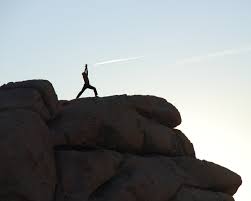
Image result for yoga creative commonsImage result for yoga creative commonsImage result for yoga creative commonsImage result for yoga creative commons

Random yoga pics from the internet. But maybe not so random. Before you ever get to a yoga class, you're exposed to images and ideas that convey serenity, and the ubiquitous "oneness" with nature or self in some mystery of the universe way. These are appealing qualities. Who among us wouldn't welcome peace of mind. You're already conditioned to expect a certain outcome from yoga, and the way our minds work, we'll often find ways to make sure we interpret that we're experiencing what we expected.

Image result for mountain biking sunset creative commonsImage result for mountain biking sunset creative commonsImage result for swimming creative commonsImage result for hiking sunset creative commonsImage result for mountain biking sunset creative commonsImage result for hiking sunset creative commonsImage result for hiking sunset creative commonsImage result for hiking sunset creative commonsImage result for trail running creative commons

In reality though, we can find this experience in many ways, and seeing images of other activities in serene backgrounds can evoke the same emotive longing. Important to be aware of how we're influenced by images and ideas that we're exposed to over the long term. But if you believe the yoga sunset pictures are more serene than other sunset pictures, it will either be because the picture is reenforcing this previously made association in your brain, or because the photo is framed better, has better colour saturation, and has a more emotive staging.  That's how that works.

From what I've seen, yoga is particularly aggressive at pushing this angle, and insisting a yoga superiority in delivering this experience.  Marketing works.  An interesting twist is that because yoga is slogged as being the ultimate humanistic/ spiritual approach, there is a baked in notion that yoga companies aren't trying to sell you anything.  No, not them.  They're pure soles.  They're simply welcoming you to your new level of self awareness, on special this week for first timers, and if you buy now you get a free yoga mat (regular value $69.99).  Chakra alignments extra.

A sunset yoga pose image reenforces the perception.  You're likely to think it looks great, and that maybe, upon viewing that image from inside the office, yoga is looking like exactly what you need.  But you could also go for a walk, jog, ride, in a park and stretch at sunset.  No yoga.  You'd also feel good after that.

An athlete I train went to a yoga class for the first time and did nearly every pose better than most of the regulars.  The athlete told me they were really good at yoga and felt great afterwards, and that they think the benefits are obvious so they should keep going.  I asked them what made them so capable of doing the yoga poses.  "I don't know, I guess I'm just naturally good at it."  I asked, "could it be all the strengthening and stretching I've taught you over the last year?"  They had the dead pause and replied, "I didn't think of that.. yeah I am definitely way more flexible and stronger since you started training me.. my back doesn't hurt anymore and it doesn't hurt to run."

Did these benefits occur only after this one yoga class you did, or do you think it was the last year of training?"  "Obviously it was the last year of training, one class can't do all that."  Exactly. This athlete doing a standard strength and conditioning program that included regular stretching had them flexible and stable enough to pull off nearly every yoga stretch on the first try.  Why?  Because that's what strength and conditioning does. That's what good quality physical activity does, you don't need to embellish the perception of the natural response to physical activity with phoney woo-woo.

People were dumbfounded that this person was so good at yoga having never done it before.  They had become convinced that only yoga, and only long term dedication to yoga could provide these adaptations.  They didn't realize yoga is simply exercise, and that any well rounded regular exercise will produce good results.

It was interesting to me that this athlete was so willing to attribute his pre-yoga class performance to the single yoga class.. such is the power of suggestion.  So even though prior to the yoga class this athlete had expressed how great they feel about how strong and flexible they had become through consistent cardio, strength, and flexibility exercise, they suddenly experienced some kind of amnesia and attributed all their gains to a single yoga class and dismissed their previous year of exercise.  Until I reminded them of all the gains they made.  This is how strong the power of suggestion is and how effective yoga marketers are at convincing people to believe impossible promises.

I'm not entirely impressed with the endless barrage of promises of the 'magic' of yoga.  Huge promise of hope and health, in fact, too good to be true, but where our health or performance is concerned, many of us are all too willing to believe whatever promise of super-duperness that comes along. Magical thinking appears to be a prerequisite for yoga.

Yoga is not the only way, the best way, or the fastest way to become flexible.

There is another reason many will do yoga: stress relief.

There are lot's of studies demonstrating that yoga can reduce the perception of stress.  OK, how about all the studies that show that a good nights sleep will also reduce stress?  How about the studies showing that any regular exercise reduces stress? How about studies showing that learning to be introspective and mindful also reduces and prevents stress?  What? Say it ain't so! You mean a person can learn to be emotionally calm and overcome reactionary tendencies without yoga?

Sure, studies do show that yoga can help manage stress.  It's a little shortsighted though to forget to mention that studies also show that any physical activity can reduce stress.. most more effectively than yoga, especially if you raise the intensity.

A runner I know told me they didn't have enough time to get to yoga recently and was feeling anxious about not getting their regular dose of stress relief.  I said, "why don't you simply do a bit of yoga at home?"  I followed that up by saying that running reduces stress as much or more than yoga does.

After they pondered that for a bit they replied, "I've been convincing myself the only way I could reduce stress was at a yoga class, but I don't need the class".  Exactly.  Yoga holds no patent on stress relief and certainly is not the most potent strategy to reduce stress.  Part of this runners stress was coming from the anxiety they experienced from not doing yoga.  How's that for irony?  They had the false impression that management of their stress had to come from yoga.  Their false belief limited their perceived options to deal with stress.  Again, the cult of yoga works it's way into peoples heads convincing them yoga has special, unique effects that you can't get anywhere else.  Once hooked, many people have great difficulty realizing that yoga really isn't all that it's portrayed to be.

Yoga does not stimulate an endorphin response more effectively than any other exercise, but it does produce an endorphin response. The point here is that the naturally expected adaptations of increased flexibility etc come from being active, but the yoga guru's obscure this reality and claim that it's yoga's specialness that delivers the goods. Historically, prior to us understanding what a dopamine response is, human beings will have still experienced the euphoric experience of dopamine release.  But back then, lacking modern comprehension of brains, psychology, and muscles, people would have speculated about extra normal causes for these feelings.  They will have imagined a cosmic alignment, a spirit causing you to feel a certain way. But this was born in peoples fertile imagination, not through evidence based, tested fact finding.  Getting better at exercise naturally improves the rewarding feeling.  I can see our ancient counterparts believing that ritualized movements were appeasing an imagined force, causing them to feel good.  They would not have known physical activity was causing neural and skeletal muscle adaptations, and emotionally stimulating psychological responses.

But today, we understand that we don't need dogmatic poses or rituals to effectively stimulate our brains to make us experience a euphoric or peaceful feeling.  We now understand that ancient humanity made mistakes in their conclusions.  We didn't need to meditate in a cave for years to achieve a more calm demeanour.  We now know that a few weeks of focussed compassionate thinking exercises will get this result.  But the ancient guru's didn't know that, and that's fair game, for back then.  Might not be so fair today to try and convince people that your Chakra needs alignment and that spiritual thinking will lift you to another plain and cure or prevent illness, because promising such things is fraud.  We now understand that those things aren't real, but were an uninformed way of explaining a natural phenomena that is simply part of human nature, explained by brain circuitry and neurotransmitters.

I can tell you that regular healthy physical activity can reduce the number of colds you get (by about 40% compared to sedentary), but this is explained by immune system and overall general physiologic adaptations to exercise and good recovery.  It would be wrong for me to tell you that I have a special diet, or special way of exercising that connects you with an immeasurable hidden power that can only be accessed with a certain way of thinking and moving.  I would be obfuscating the truth of your own physiology and convincing you that you needed to follow "my way" to get these benefits.  And, you want these benefits, don't you? That natural want can make us vulnerable to accepting the promise of hope, especially one that is elaborate and already has a lot of followers.

It's like a person doing a rain dance before a rain storm, then claiming their actions caused the rain, rather than the rain being a natural occurrence (we know how rain is part of the hydrological cycle. And we know how cells adapt to exercise).

One of my favorite studies on stress demonstrated that a mere 5 minutes of exercising in a green environment provided one of the best dose-reponses for exercise that reduced stress (5).

Any exercise can reduce stress, typically more intense exercise is better at releasing more of the hormones that make you feel good, and the more you do exercise (up to a certain point) the better your body gets at producing the hormones that make you feel good.  If you do yoga, which is physical activity, an endorphin response will occur.  It's not the "yoga", it's not spiritual, it's a natural response to exercise.  Don't fall for the bait and switch. This doesn't mean you give up those good feelings, you still get those good feelings of course, but instead of being misled as to their cause and origin, you'll know that this is your natural physiology.  You can get those feelings under your own power, anywhere you like.  They're yours to experience, not for a self aggrandizing, self anointed guru to give you.

How about the mindfulness that yoga can promote?  Yes, practicing compassionate and mindful thinking during yoga can help a person become more mindful.  But do you need to do yoga to do this?

An 8 week study on mindful thinking demonstrated that study participants who were directed to focus on non-judgmental thinking produced physical changes in their brains (6).  Grey matter density increased in areas of the hippocampus important for learning, compassion, and introspection.  Grey matter density decreased in the areas of the amygdala important for anxiety and stress.  Participants reported reductions in feeling of stress.

It's the physical function and distribution of grey matter density in your brain that are responsible for the changes, not a spiritual or cosmic or hidden inner energy.  So what's the problem with believing in hidden energy if you still get the benefit anyway?  You are mislead into believing falsehoods.  Falsehoods that you can become dependant on.  Falsehoods that divert you away from reality and prevent you from making informed decisions. You don't need to do a rain dance to water your garden.  You can irrigate it with your hose, because.. we know how to do that now (and we can do it so much better).

Regular practice of mindful thinking about being non-judmental and compassionate changes your brain so you become more effective at being non-judgmental and compassionate.  You can do this in a yoga class, or anywhere, anytime you like, and you don't have to be a monk or yoga master to do it (7).

When you practice non-judgemental and compassionate thinking, you are purposefully stimulating a natural adaptation in your brain.  Yoga people hijack this and tell you this is a spiritual awakening, or a manipulation of your inner energy, or some other euphemistic phrasing that sounds poetic and comforting. We are attracted to wanting to believe in these esoteric concepts and quick to dismiss reality.  It's common to not accept that reality is actually pretty good, and so to feel content we gravitate to utopian ideals and don't realize the deception.

You know that warm fuzzy feeling you get when you give and or receive a caring hug?  The hormone oxytocin is largely responsible for the perception of that feeling.  Knowing that doesn't diminish how good a hug feels, and doesn't make the good feeling go away. Interestingly, the more we know and appreciate someone, the more profound the hormonal response is. I think this is great!  But I know the warm fuzzies aren't due to energy fields aligning, that's nonsense.

If I found out that someone had BS'd me into believing these wonderful human feelings came from a cosmic energy alignment, but really it was normal human physiology, I wouldn't like that I had been mislead. I wouldn't like that I had been convinced to engage in special rituals in order to obtain and preserve how good a hug can feel.

I wouldn't like the fact that I had changed my thoughts, and behaviours, and invested my time and possibly money into this misleading scheme.

I might become disenfranchised with the person or people who acted like all that fluff was real, and who had indoctrinated me.  No this hasn't happened to me, but that's how I would feel. I have had people try though, and I didn't like it.  I have seen people get sucked in, and I don't like that either.

It's more empowering to know that how good I can feel is actually from my own doing, my own caring, compassion, and empathy (and my own pituitary gland), not from a ritual someone told me I have to do.

What about hot yoga?  Snake oil.  Many hot yoga purveyors will promise you that sweating in a hot yoga class will rid you of toxins that make you sick.

Apparently 'yoga sweat' is different than say, 'bicycle sweat'. Fat chance.  You can't sweat out toxins and net an anti-illness health benefit.  Body doesn't work that way. Sounds real special though, don't it?

Want to know one the biggest deceptions of hot yoga?  Sweat.  You can see it.  You're drenched in it.  Everyone is.  It's spectacle that draws your attention.  You can feel it.  You're immersed in it.  The instructor points it out to you.  You're promised you're going to sweat before the class, and the promise is fulfilled, so you feel gratified.  So what's the issue here?  You'll also sweat a lot riding your bike or going for a run on warm day, even more on a hot day.  Nothing special or unique is happening here.  It's like someone selling you air to breath.  You're already breathing air.

The way sweat works best to cool our body temperature is to have sweat evaporate.  When it evaporates it's gone.  So while we can certainly become wet with sweat while running and cycling, most of our sweat is evaporated by the airflow caused by our speed.  Sometimes, if the breeze is strong enough, you won't see much evidence of your sweat because it's evaporating at nearly the rate it's being produced.

Comparatively it will appear you can sweat much more in a hot yoga class, and anecdotally it can be difficult to refute this.

The hot yoga scam artist will use their rose peddled tongue to calmly indoctrinate you into believing you're sweating more, sweating in a special way, and becoming less ill and more healthy .. because you're sweating.  And hey, you KNOW you're sweating right? So they must be right.

What do you call a person that promises you that they have a special cure for what ails you, but really they don't?

One of the tenants of hot yoga is that the heat reduces the discomfort of pushing past your current range of flexibility.  Both instructors and students alike applaud this "benefit" and indeed comment on how much less it hurts.  That's a pretty big problem.  That discomfort is there for a reason; it's sensory feedback to tell you you're passing your safe limits.

It's important to be sensitive to your current limit of flexibly so you can progress your range of motion gradually, without stressing connective tissue too much.  The heat reduces pain, but your tissues are not instantaneously made stronger.  Connective tissue strength is still the same, but you're now at greater risk of surpassing that strength because you can't feel the warning signs of pain as well.

When you apply critical thinking, and look at factual evidence, it's easy to see that most of the health and fitness claims attached to yoga are either exaggerated, or complete nonsense.

An important factoid regarding adapting to exercising in a hot environment, like a hot yoga class.  Part of heat acclimatization involves a preservation of minerals lost in sweat.  The more you exercise in a hot environment the less salt will be excreted for the same amount of sweat.  The rate of everything that will be excreted, including the tiny trace amounts of potassium, calcium, iron, lead, lactate, will be reduced the more you do hot yoga.  So much for the promise of sweating out toxins.  In fact the exact opposite would occur; if toxins were released in sweat, hot yoga would decrease the release.  In reality it's your liver and kidneys that handle the extraction of toxins from our bodies.  Sweat glands, quite simply, are not a significant part of our bodies detox system.  Why don't hot yoga people tell you this?  You can't teach what you don't know.  But hey, sure sounds good to be told you'll sweat out toxins.  Makes the yoga instructor seem knowledgeable too.  Too bad it's all demagoguery though.

Here's a study showing reduced mineral loss in sweat though heat acclimation.

 http://www.ncbi.nlm.nih.gov/pubmed/18408609

Your liver is a multitasker, converting lactate into sugar to be used as energy, storring sugar, making proteins, making biochemicals for digestion, filtering toxins, and more

Your kidneys are also multitaskers, removing urea and ammonium from the blood, regulating blood pressure and pH balance, and producing hormones, and more

Your sweat glands main job is to cool the body.

If you're into yoga or considering it, consider the facts I present here, you may find that yoga isn't all it poses to be.

I like the fact I can throw my foot up on the counter or reach past my toes and give my hamstrings a good stretch all on my own.  That feels great. Most stretches can be done pretty much anywhere, any time, and produce the desired outcome if one learns how to stretch effectively (not being too aggressive, but going deep enough to feel a mild tightness, then holding until the tightness subsides. Then go a bit deeper and wait for tightness to subside again. Repeat tightness - wait until subsides cycle 3-5 X).

Comparatively yoga is no better than stretching for increasing flexibility (because yoga is stretching), is not a suitable replacement for aerobic exercise, isn't as challenging as strength training and wont make you as strong as strength training (or build and maintain muscle mass and bone density as well), and is not better at stress reduction than any other exercise, and finally yoga is not the best, or the only way to guide yourself to being more introspective or compassionate.

What about using yoga to augment what you're already doing?  Many athletes are being taken in by the promise of hope that yoga will improve recovery and flexibility.  Really?  Introducing proper recovery and stretching to those who don't do so regularly will decrease stress and increase performance.  If you affix a yoga label to these actions you're likely to convinced it was the enigma of yoga, rather than explainable adaptations to stretching and recovery. It's a reasoning fallibility called confirmation bias.

You can increase flexibility in yoga by doing the stretches (euphemistically called poses).  If your training load is lacking proper recovery and you replace some training with the lower workload of yoga, you'll recover more.  But it would not be yoga that is the cause of recovery or flexibility, it would be removing the extra training and adding stretching.  

Yoga is an option, and many enjoy it.  From what I've witnessed, many apply far too much benefit to yoga and have been taken in by the subdued pomp and circumstance, and the promise of hope.

There are many options open to all of us, many of which fall into the too good to be true category.

1) The metabolic cost of hatha yoga. [J Strength Cond Res. 2005] - PubMed - NCBI

2) Does practicing hatha yoga satisfy... [BMC Complement Altern Med. 2007] - PubMed - NCBI

3) A randomized trial comparing yoga, stretchin... [Arch Intern Med. 2011] - PubMed - NCBI

4) What is the Best Dose of Nature and Green Exercise for Improving Mental Health? A Multi-Study Analysis - Environmental Science & Technology (ACS Publications)

5) What is the Best Dose of Nature and Green Exercise for Improving Mental Health? A Multi-Study Analysis - Environmental Science & Technology (ACS Publications)

6) Mindfulness meditation training changes brain structure in eight weeks

7) Brief meditative exercise helps cognition