
"Cris is comparing the most expensive bad food to the least expensive healthy food. Kraft Dinner is 50 cents a box and you can feed four kids on that."
He was referring to these comparisons I made in these blog entries:
Healthy Food Still Cheaper; Despite new "Research"
Healthy Food Cheaper: Potato chips 1134% more $$ than potatoes
I've heard the cheap mac and cheese argument before. First, I'm not cherry picking the cheapest healthy foods, I'm picking common healthy foods that are readily available at all grocery stores, and comparing those to the most commonly purchased unhealthy foods.
At any rate the reality is I generated a lengthy list of healthy foods that are less costly than unhealthy foods. The choices are real, the choices are available.
Right after the interview I went straight to Walmart. I'm not trying to advertise for Walmart and not all shoppers will choose to shop for food there. Regardless, Walmart will have amongst the lowest prices for food so it's a reasonable place to do lowest-cost food comparisons.
I went straight to the Kraft Dinner. On air I claimed that rice, beans, and potatoes were cheaper than Kraft Dinner.. let's see if I was right..

Kraft Dinner $5.00/ kg
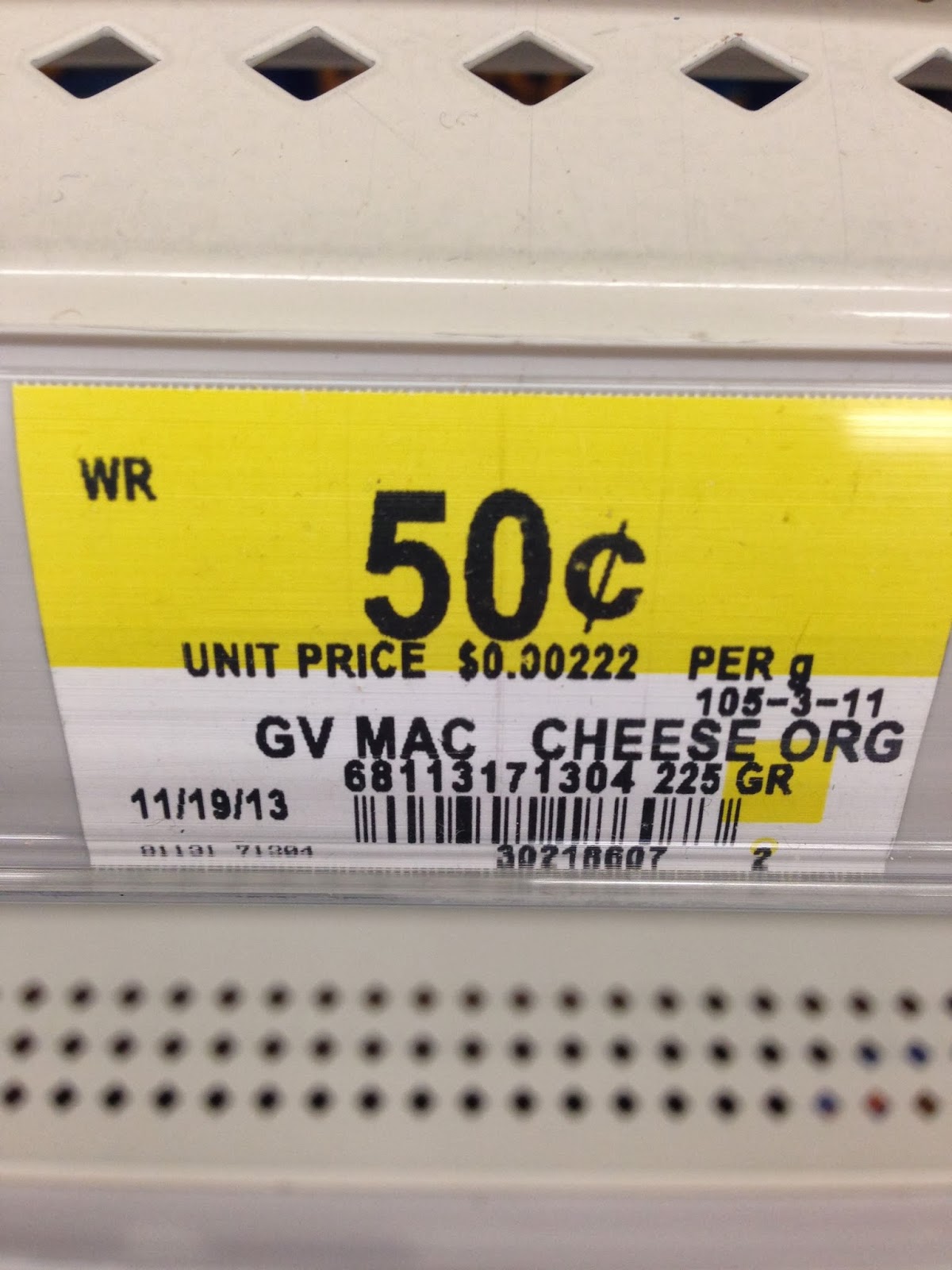
Great Value (Walmart brand) Mac and Cheese $2.22/ kg

Basmati rice $6.23/ kg

Parboiled rice $1.25/ kg

Brown rice $4.29/ kg

Spinach lasagne $2.74/ kg

Canned beans $2.19/ kg

Oatmeal $2.00/ kg

Potatoes $0.66/ kg
If you shop you will find alternatives to mac and cheese that are more expensive, as well as cheaper.
Your choice.
The fact is, it doesn't take much to find healthy foods that are about the same price as mac and cheese or, cheaper.
So why do most believe the urban myth that mac and cheese is bar-none the cheapest food you can buy? We love urban myths and never bother to fact-check them. It feels better to boast about sensationalized things than to converse with straight-talk about facts.
Potatoes are one of the cheapest foods that still have a pretty good nutrient profile, and are easy to prepare in many tasty ways. A big plus is that most people like potatoes.
You can see the spinach lasagne is about the same price as the mac and cheese, and that the actual Kraft brand of mac and cheese is about double the price of the lasagne.
So what gives here? A lot of this has to do with packaging. The mac and cheese is sold in a much smaller quantity in a much smaller package allowing for a lower price per package.
Many shoppers will look at the package price only, and not realize that the price of the product sold by weight is actually not as cheap as it appears at first glance.
There are definitely healthy foods that are expensive, but there is a very long list of healthy foods that are cheaper than less healthy foods. It's easy to divert our attention by focusing on expensive healthy choices like kale and allowing ourselves to cry and moan about the cost; or you can buy broccoli (which is about $2.10/ kg, less than mac and cheese), and has similar nutrient density compared to kale and spinach. You don't need specialty items like kale or expensive fruits like papaya to meet your daily nutrient needs. I'm not saying don't eat kale (which is coming down in price as popularity rises, and you can grow it in your back yard for dirt cheap), or papaya.
I'm saying that for every expensive healthy food, there are at least a few less expensive healthy food alternatives. Turning to junk food because it's supposedly cheaper, is blindly following an urban myth.
Did you catch that? Broccoli is cheaper than mac and cheese. So are apples, oranges, and bananas.
Carrots, broccoli, apples, oranges, bananas, eggs, rice, beans, oatmeal -- all are cheaper than mac and cheese.
You can meet all your energy and nutrient needs with less costly choices than are found through junk foods or cheap processed foods.
Are we really trying to find a way to buy the cheapest food simply because it's the cheapest? What if the cheapest food doesn't nourish us very well?
Don't be duped by small packages and urban myths.
Shop smart, compare prices, and be aware of nutrient density. Potatoes and beans are cheaper than mac and cheese and deliver more vitamins and minerals.
We're not just eating to get full. We need to meet our daily vitamin and mineral needs as well. Keep this in mind while food shopping and you'll become a savvy consumer.


